This post was prompted by a recent exchange on Twitter, where I’m pretty active (@spiderbill if anyone wants to follow along). The conversation turned to readers who had loved Lymond but couldn’t get into Niccolo (both series and character) and Ellen Kushner, who as many of you will know is a very well respected author and avowed Lymond fan, said she felt HoN was maybe too much writing technique and not enough heart.
Allison Stock, who has just read Lymond for the first time and has been entertaining us with her comments, and is now three-quarters of the way through Niccolo, asked in reply if Ellen felt “…was that BECAUSE of Nicholas as a character, or was Nicholas’s character a result of excessive technique?” @DunnettCentral then asked for other’s comments but I felt it was impossible to summarise such a complex issue in the 140 character format of Twitter. So here we are!
As always there were varied responses around the basic topic of which series people like best. One felt that Nicholas was arrogant; which slightly surprised me as that is usually a jibe thrown at Lymond, though I think I understand what was meant. Another said that Nick was motivated by revenge. On the other side the HoN was felt to be greater in scope – more diverse socially and culturally, and with more believeable women compared to the brilliant ones of the Chronicles.
This discussion took me back to the halcyon days of Dunnetworks and Marzipan discussions, where we compared and contrasted the two series on many occasions. It was interesting to hear one old chestnut revived – that the series you start with is the one you prefer. That was a common view for a long time and has some apparent merit as a common sense idea, but in fact in the days when membership of the email lists ran to many hundreds this was tested and found to not be anything like as clear cut as expected.
Now I should declare my allegiances at this point. I adore both series but if I was on that fabled castaway island with the miraculous choice of reading I would take Lymond every time.
It’s an emotional response without doubt – the characters in HoN are complex and intriguing and fascinating but for me the ones in LC are vivid and alive to the point where you feel you know them personally, and the emotional connections they make with each other and with us feel as concrete as those in our real lifes. In a very real sense we are in love with them, we yearn with them, we despair at the cruel turns which block their paths to happiness, we feel their confusion and their clarity, their disillusionment and their determination. We shout at the books in horror as we see a wrong decision or a missed opportunity. And we cry with Philippa when the worst possible tune is played by the band below her windowsill, and feel the stab in the heart as Lymond in the tower shuts down his body to maintain a flicker of life with her name on his lips.
For all the wonderful descriptions, the ingeniously deep plotting (by both author and protagonists), the richness of the interactions and the historical connections, I don’t quite have the same emotional response to HoN. There are times when it comes close: when you feel Gelis’ confusion over her feelings towards Nicholas, when you grasp something of Kathi’s hyperactive pesonality, or Tobie’s curiosity mixed with apprehension about where Nicholas could be heading next. But perhaps because the main character is so veiled in his emotions despite us seeing far more often through his perspective than we ever see through Lymond’s, it feels that there is a level of connection that is missing.
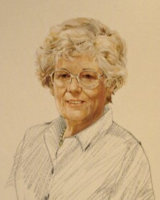
As an aside it reminds me of a conversation Dorothy and I once had. The discussion had turned to music and she was quizzing me about my tastes after I’d mentioned the coincidence that Alastair and I shared our choice of favourite symphony – Beethoven’s Seventh. She knew I was a former sound engineer and understood when I said there were certain types of music that I could admire and analyse despite not really liking them – classical voice for instance does very little for me. I can listen to someone like Fischer-Dieskau and marvel at his control and tone but I don’t actually like listening to lieder as preferred music as I just don’t connect to it emotionally, and to me emotion in music is everything. We discussed the music of Mozart, undoubtedly great, wonderfully flowing melodies, but for me the sheer genius and emotional impact of Beethoven, the crashing splendour and turmoil of Neilsen, the romanticism of Rachmaninov – that is the music (on the classical side) that I connect to the most. Dorothy understood, though being a lover of opera she did encourage me to listen to more of Mozart’s contributions to that field. (We never did get round to Italian opera before the conversation took different turns!)
Now all this is not to say that this is a fault in House of Niccolo, it is simply that my connection to the books is on a more emotional basis. Others may have a very different connection. I’ve often heard Ann McMillan wax lyrical about Nicholas for instance and there is no doubt that she has a connection to and perhaps an understanding of him that is different to mine. Another dear friend and long-time correspondent Tina Dallas also feels a closer bond to both Nicholas and Gelis than to Lymond.
Nor are my observations above a criticism of the writing in any way. Unlike some other authors (who may be more beholden to their publishers), Dorothy didn’t want to write a second series of Lymond. In returning to a series format after completing a near decade of research and writing of the outstanding King Hereafter, she wanted to do something new, something different, to challenge herself and her readers in different ways before leading them full circle. We see her swapping character traits and looks initially, maybe just to remind us that all is never what it seems and to show us that not only is there more than one kind of hero but that life often has many shades of grey, and that personal motivations can be even more byzantine than those of Lymond’s political landscapes.
But she was also developing an even wider and more complex series of ideas. For example, are heroes always heroes, are villains always villains, or are they entangled and intertwinded? Do heroes do bad things, whether for good or evil, and does that stop them being heroes? Do villains ever do brave things for the right reasons, and are they born villains or do circumstances create them? We’re a long way from the blatant evil of Graham Reid Mallett!
And what of the main characters themselves? One of the Twitter posters said that “Niccolo grew into his character; Lymond’s seemed fully formed at 21.” and that is also a key point when attempting to compare the series. Lymond has had the benefit of Sybilla’s immaculate upbringing and the resources available to a noble family. He has then been tested in the most dangerous of situations in the galleys and as a mercenary. He appears fully formed when we first meet him, though it is the missing/damaged aspects of his life and the unravelling of his psyche and the moral certainties he had relied on that forms a large part of the story. Nicholas’ story is starting earlier, with a far poorer education and troubled background, lacking mother or father and with only Marion’s necessarily detached guidance to steer him. His is a story of development, of what circumstances shape that person he becomes, of what demons – some obvious and others deeply hidden – he must face and overcome. It is also very much a story of moral development from the ground up, lacking guidance or moderation after Marion’s death, and possessed of a fearsome ability to create and set off intricate scenarios that have unpredictable consequences, he must learn from experience and sometimes take the wrong route before building a moral compass of his own.
Such differences and the added complexities of Nicholas’ story make fair comparisons almost impossible. We can read them in many ways but ultimately only marvel at the wordsmith’s skill and the exquisit world building. For me, the romantic chess player and emotional music listener, it is the first series that captures my heart a little more completely. For others, perhaps with Dorothy’s love of puzzles, and a deep appreciation of interwoven and multi-layered plots it may be the second.
But of course you know that she regarded them as one unified series of 14 books…
Is that the faint sound of laughter I hear?
I hope so, for in these precious gifts of books we have found a banquet under the heavens that will serve us for ever!